


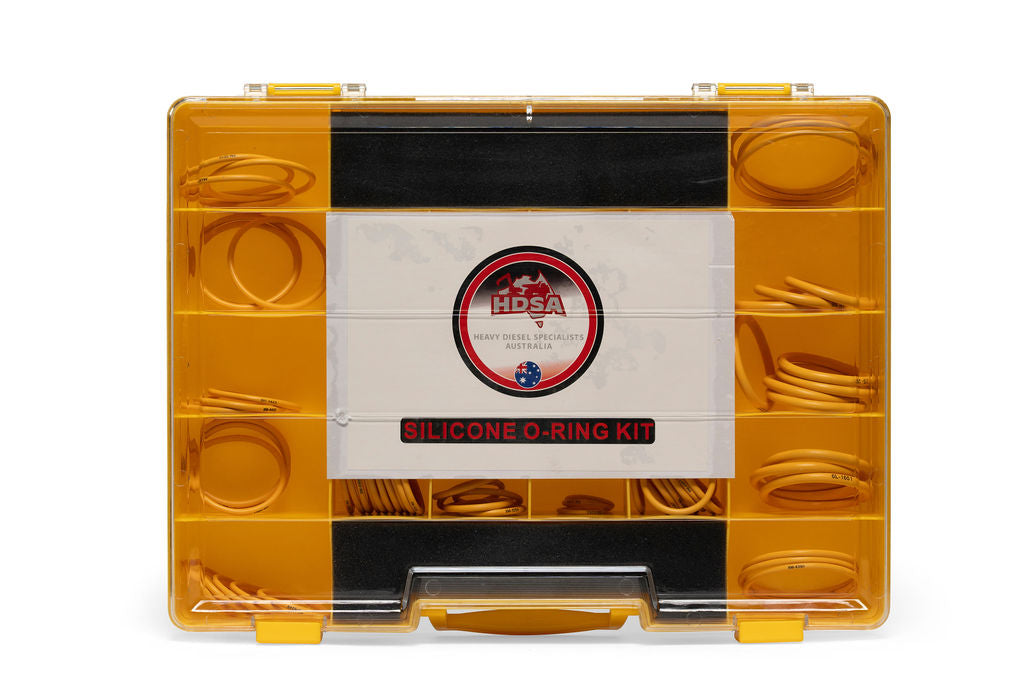
- Description
- What's included
- Hi-temp silicone o-rings
- OEM quality
- 149pc kit
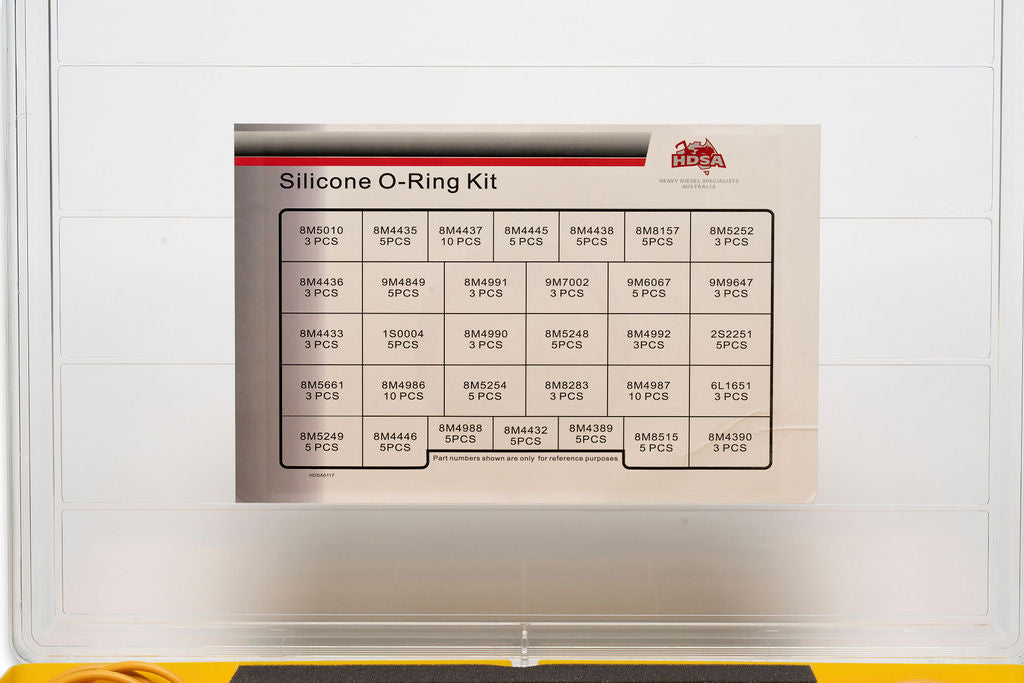
Kit Includes
-
8M-5010 – 3 pcs
-
8M-4435 – 5 pcs
-
8M-4437 – 10 pcs
-
8M-4445 – 5 pcs
-
8M-4438 – 5 pcs
-
8M-8157 – 5 pcs
-
8M-5252 – 3 pcs
-
8M-4436 – 3 pcs
-
9M-4849 – 5 pcs
-
8M-4991 – 3 pcs
-
9M-7002 – 3 pcs
-
9M-6067 – 5 pcs
-
9M-9647 – 3 pcs
-
8M-4433 – 3 pcs
-
15-0004 – 5 pcs
-
8M-4990 – 3 pcs
-
8M-5248 – 5 pcs
-
8M-4992 – 3 pcs
-
2S-2251 – 5 pcs
-
8M-5661 – 3 pcs
-
8M-4986 – 5 pcs
-
8M-5254 – 5 pcs
-
8M-8283 – 3 pcs
-
8M-4987 – 10 pcs
-
6L-1651 – 3 pcs
-
8M-5249 – 5 pcs
-
8M-4446 – 5 pcs
-
8M-4988 – 5 pcs
-
8M-4432 – 5 pcs
-
8M-4389 – 5 pcs
-
8M-8515 – 5 pcs
-
8M-4390 – 3 pcs
Uses of High-Temperature Silicone O-Rings in Earthmoving Equipment
High-temperature silicone (VMQ/PVMQ) O-rings are commonly used in earthmoving and heavy-diesel applications where sealing components must withstand elevated temperatures while maintaining flexibility and stability.
Where High-Temp Silicone O-Rings Are Commonly Used
-
High-heat, low-pressure sealing points such as certain transmission, torque-converter, and driveline service locations.
-
Static seals in areas exposed to substantial radiant or conductive heat (near exhaust components, turbo systems, or high-temperature housings).
-
Environmental and weather-exposed seals needing excellent ozone, UV and aging resistance.
-
Components subject to frequent temperature fluctuations, where silicone’s low-temperature flexibility helps maintain seal integrity.
Why Silicone Is Selected
-
Excellent high-temperature resistance—typically up to around 200 °C, depending on compound grade.
-
Superior low-temperature flexibility compared with many other elastomers.
-
Strong resistance to ozone, oxygen, and long-term weather exposure, making it suitable for equipment that operates outdoors in harsh environments.
-
Good compression-set properties, allowing the seal to maintain shape and performance under prolonged heat.
Limitations and When Not to Use Silicone
-
Not ideal for high-pressure hydraulic circuits where sealing stress is high; other elastomers generally perform better under high pressure.
-
Reduced resistance to petroleum-based oils and fuels compared with materials such as nitrile, HNBR or FKM.
-
Less suited to dynamic sealing surfaces with continuous movement or abrasive contamination.
Practical Examples in Earthmoving Equipment
-
Heat-exposed transmission or converter housings with moderate pressure.
-
Static covers, access plates, inspection ports, and similar components that encounter heat but minimal oil immersion.
-
Auxiliary systems where temperature is the main stress factor rather than pressure or fluid type.
Material-Selection Guidance
-
Use silicone O-rings for high-temperature, low-pressure, low-oil-exposure sealing environments.
-
For high-pressure or oil-immersed applications, select other elastomers designed for fuel and hydraulic-oil compatibility.
-
Always match seal material to the specific operating conditions—temperature, pressure, fluid type, and mechanical load.